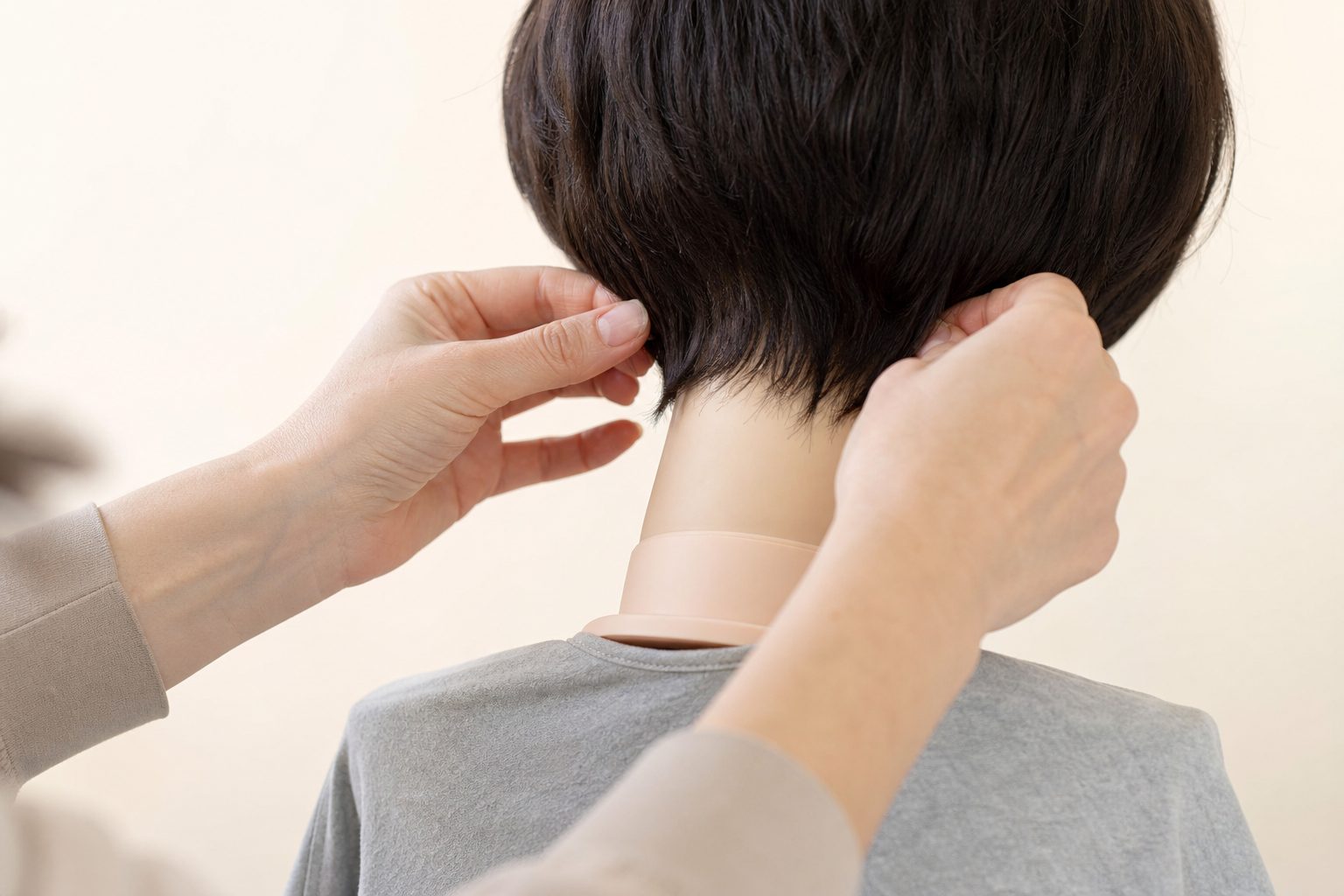
The returns that hurt a small studio are almost never mysterious. In practice they cluster into a short list: a cap measured over hair that was never smoothed down, a density chosen to flatter a photograph rather than a face, a hairline placed too low and too even, and a nape that was never checked on a bare scalp. Those four account for most of what comes back to the chair asking to be fixed.
What they share is timing. Each one is created in the first twenty minutes of a fitting and discovered three weeks later, after the unit has been ordered, cut and paid for. By then your options are alteration labor you cannot bill, a vendor remake request that may or may not be honored, or a client who quietly stops answering the phone.
The fix is not more skill. It is a set of small verification points placed at the exact moments where these errors are cheap to catch, plus a written record of what you measured and why, so that a disputed fit becomes a document rather than an argument.
Measuring over existing hair instead of a smoothed scalp
A client in her first oncology consult often still has most of her hair. She may have another two weeks before shedding starts. If you take a circumference over that hair, you are measuring a head that will not exist when the unit arrives.
The gap is not small. Depending on hair volume, an unsmoothed measurement can run half an inch to a full inch larger than the same head under a smooth wig cap. On a 22 inch circumference, an inch is nearly five percent. That is the difference between a snug fit and a unit that shifts every time she turns her head in the car.
What to do instead
- Put a nylon or mesh cap on before any tape touches the head, every time, even when the client insists her hair is thin.
- Take circumference at the natural hairline, above the ears, around the occipital bone, and record where you crossed the bone, not just the number.
- Record front to nape, ear to ear over the top, ear to ear across the nape, and temple to temple.
- Note the current hair state on the record: full, thinning, patchy, bare. This is what tells you how to read the number later.
For a client who is pre treatment, take both measurements: over the cap with her hair smoothed, and your estimate of the bare scalp. Then order to the bare scalp figure and plan an adjustment. A unit that starts slightly snug and is eased is recoverable. A unit that starts loose is not.
Keep reading: How should I price a full custom cranial prosthesis when the client is waiting on reimbursement?
Choosing density by preference rather than by facial scale and age
Almost every client, shown a wall of samples, reaches for the fullest one. It reads as healthy. In daylight, on a woman of 52 with a fine bone structure, that same density reads as a wig from thirty feet away.
Density is the single most common reason a unit is technically correct and still returned. The cap fits. The color matched. She still will not wear it to work.
A rough scale rule
Use the client's own pre loss photographs as the anchor, not the sample wall. Ask for a picture from two to five years back, in ordinary light, not a styled event photo. Then set density one step below what that photo shows. Hair loss clients almost universally overestimate their prior volume, and a slightly lighter unit sits closer to what a colleague expects to see.
Where the client insists on more, write the disagreement on the fitting record in her presence: density requested at 150 percent, studio recommendation 130 percent. That single line has ended more remake disputes than any amount of persuasion at the counter.
Setting the hairline too low and too straight
A natural hairline is asymmetric, slightly recessed at the temples, and irregular in its front edge. A wig hairline out of the box is none of those things, and the instinct to place it low, covering the client's own thinning edge, makes it worse.
Place the front edge where her hairline actually was, which on most adults is roughly four fingers above the brow, then customize: pluck the front edge irregularly, deepen the temple recession slightly, and leave a small amount of the client's own front hair out where she still has it. A low straight hairline is what people mean when they say a wig "looks like a wig" but cannot say why.
Keep reading: What paperwork do I need to keep on file if a client pays with an HSA or FSA card?
Ignoring nape and ear tab placement on a bare scalp
Ear tabs and nape are where a unit fails in motion rather than in the mirror. In the chair, seated, facing forward, almost everything looks acceptable. Have the client stand, look down at her phone for ten seconds, turn her head fully both ways, and put on and remove a coat.
On a bare scalp there is no friction. Tabs that sat correctly on stubble slide forward on skin. Check that the tab sits in front of the ear, not on it, and that the nape does not ride up when the chin drops. A nape gap of even a quarter inch when looking down is visible from behind and is the single most reported complaint from clients who work at a desk.
Overselling adhesive to a client in active treatment
Adhesive is the fastest way to turn a satisfied client into a medical complication. Skin during chemotherapy is thinner, slower to heal, and more reactive. A scalp that tolerated tape a year ago may blister now.
The safer default during active treatment is a well fitted cap with adjustable straps, silicone strips, or a comfort band, and no chemical bond at all. If a client asks for adhesive, ask two questions: is she currently receiving radiation to the head or neck, and has her oncology team cleared topical products on the scalp. If either answer is unclear, defer and document that you deferred.
The commercial argument is the same as the clinical one. An adhesive reaction means a refund, a remake, and a client who tells the infusion room what happened.
See how StrandRestore handles this for wig and hair loss studios
Skipping the post treatment resize conversation for alopecia clients
Head circumference is not fixed. Weight changes during and after treatment, steroid courses cause facial and scalp swelling that subsides, and for alopecia clients the regrowth cycle can add measurable bulk over a few months.
A unit fitted at the peak of steroid related swelling will be loose eight weeks later. If nobody warned her, she experiences that as a defective product. If you told her at the fitting and wrote it on the record, she experiences it as an expected adjustment and books the appointment.
Set the expectation as a schedule, not a caveat: a fit check at four weeks, another at twelve, and a resize included in the original price for the first one. Building it in costs you thirty minutes of chair time and removes an entire category of complaint.
A pre order verification checklist that stops most remakes
Run this before the order leaves the studio, with the client present. Every line is a yes or a note, never a blank.
| Check | What confirms it | Common failure |
|---|---|---|
| Cap on before measuring | Record says cap used | Measured over full hair |
| Five measurements captured | Circumference, front to nape, ear to ear over top, ear to ear at nape, temple to temple | Circumference only |
| Hair state noted | Full, thinning, patchy, or bare | Blank, so the number cannot be read later |
| Density agreed in writing | Requested and recommended both recorded | Verbal only |
| Hairline placement marked | Photo or measurement from brow | Judged by eye at order time |
| Motion test done | Stand, look down, turn, coat on and off | Seated check only |
| Adhesive decision recorded | Yes with clearance, or deferred with reason | Sold by default |
| Resize expectation set | Four and twelve week checks booked | Mentioned, never scheduled |
| Vendor remake window known | Days from receipt, written on the order | Discovered after it closed |
That last line matters more than it looks. Most suppliers allow a defect or remake claim within a defined window from delivery, often measured in a few weeks. If your fit check happens at week five and the window closed at week four, you absorb the cost of a problem the vendor would have covered. Write the window on the order and book the fit check inside it.
Where this leaves you
None of these checks require new equipment or a longer appointment. They require that the fitting produce a record: measurements with context, a density decision with two names on it, a hairline reference, an adhesive determination, and dates that sit inside your vendor's window.
Keeping that consistently on paper is the part that breaks down on a busy Saturday. StrandRestore holds the fitting record, the cap measurements and the order in one place, so the checks above are prompted rather than remembered, and so the file you need in a remake dispute is already written when you need it.