A carrier accepts a cranial prosthesis claim when four documents agree with each other. A physician prescription that uses the words cranial prosthesis and names the diagnosis. An itemized invoice from your studio showing date of service, item description, and a price for the device separated from anything else you charged for. A claim form or superbill carrying HCPCS code A9282 and the matching diagnosis code. And a letter from you that ties the three together and explains, in one page, why this specific device was medically necessary for this specific person.
The letter is not the hard part. The hard part is that the four documents have to say the same thing, in the same language, about the same date. A prescription dated after the invoice, or a prescription that says wig while the invoice says cranial prosthesis, gets the file kicked back regardless of how well the letter reads.
Here is what each piece has to contain, in the order you should assemble them.
Why the word wig sinks a claim and cranial prosthesis does not
Insurance benefit language is built from category lists. A wig sits in the same category as cosmetics and personal grooming, which is almost universally excluded. A cranial prosthesis sits in durable medical equipment or prosthetic devices, which is a covered category in most plans, subject to the plan's specific terms.
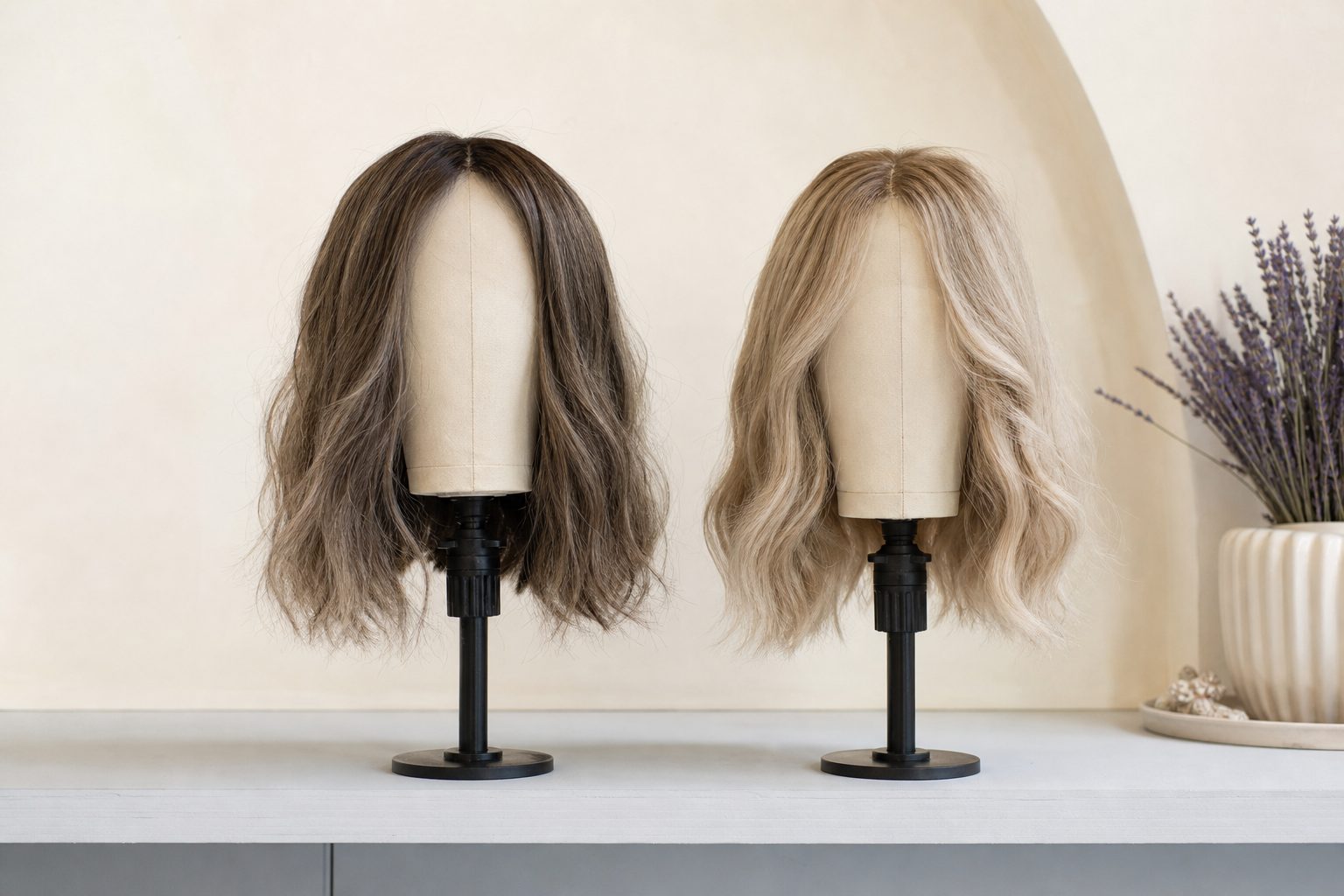
The physical object is identical. The category assignment is what the plan pays against. So the entire billing chain has to speak the prosthetic language: the prescription, the invoice, the claim form, your letter, and even the line item description on the receipt she gets.
This means changing habits inside the studio too. If your point of sale rings it up as "wig, long, human hair" and she photographs that receipt for her carrier, you have undone the rest of the file. Add a separate item in your system called cranial prosthesis and use it for anyone with a medical diagnosis.
The vocabulary substitutions worth making permanent
- Wig becomes cranial prosthesis, or full cranial prosthesis.
- Client becomes patient in any document going to a carrier.
- Purchase or sale becomes date of service.
- Styling appointment becomes fitting and adjustment, billed as a separate line.
- Fashion, style, or color consultation stays out of the claim file entirely.
Keep reading: Should I stock human hair or high heat friendly synthetic wigs for my chemotherapy clients?
Getting the prescription written correctly by the oncologist or dermatologist
The prescription is the document you have the least control over and the most riding on. Physician offices write hundreds of scripts a week and default to plain language. Left alone, you get a note that says "wig for hair loss," which is a denial waiting to happen.
Fix it by giving the patient a card to hand across the desk. It should ask for four things:
- The exact phrase cranial prosthesis as the item prescribed.
- The diagnosis, named and coded. Alopecia due to antineoplastic chemotherapy, alopecia areata, alopecia totalis, and permanent alopecia after radiation are all different codes and the carrier matches them against the benefit.
- A statement of medical necessity in the physician's own words, even one sentence.
- The date, the physician signature, the NPI number, and the practice address.
Date matters more than people expect. Many plans require the prescription to predate the purchase. If she bought the piece in March and got the script in June, some carriers will deny on timing alone. Tell every new patient to get the prescription before she orders, not after.
The HCPCS code A9282 and where it fits on the claim
A9282 is the HCPCS Level II code for a wig, any type. It is the code virtually every commercial carrier expects to see on a cranial prosthesis claim, and it is the code you put in the procedure column of a CMS 1500 or on a superbill.
Two things to understand about it. First, traditional Medicare does not cover A9282, because wigs are statutorily excluded from Medicare benefits. Some Medicare Advantage plans add a supplemental wig benefit, but that is a plan level add on, not Medicare coverage, and you have to check the specific plan. Second, A9282 pairs with the diagnosis code from the prescription, and the carrier's system checks that pairing before a human ever reads your letter.
State law is the other variable worth knowing for your own market. Several states have passed statutes requiring health plans regulated by the state to cover cranial prostheses for chemotherapy induced alopecia, usually with an annual dollar cap. These laws bind only state regulated plans, so a self funded employer plan under ERISA in the same state may not be subject to them. Look up the statute for your state, and check whether the patient's plan is fully insured or self funded, because the answer changes what you can promise her.
Keep reading: Which fitting mistakes cause the most returns and remakes in a small hair loss studio?
What an itemized invoice must show
The invoice is the document reviewers actually scrutinize, because it is where padding shows up. Keep it plain and separated.
| Field | What it must contain |
|---|---|
| Provider | Studio name, full address, phone, tax ID |
| Patient | Full legal name, date of birth, address, member ID |
| Date of service | The date the device was delivered, not the order date |
| Item description | Cranial prosthesis, with construction and fiber noted |
| Diagnosis reference | The code from the prescription |
| Device charge | One line, one price |
| Related services | Fitting and adjustment as separate lines, if you bill them |
| Payment | Amount paid, method, balance, and paid in full stamp if applicable |
Keep accessories off the claim invoice. Liner caps, stands, shampoo, and combs read as retail and can prompt a reviewer to question the whole submission. Sell them, receipt them separately.
The studio letter of medical necessity: structure and required elements
Your letter does one job: it translates the clinical prescription into the specifics of what you actually provided, so a non clinical reviewer can connect the two without guessing. Keep it to one page and put it in this order.
- Header. Studio letterhead, date, and the patient's name, date of birth, member ID, claim number if you have one.
- Statement of what was provided. One sentence. On March 4 our studio fitted and delivered a full cranial prosthesis for this patient.
- The clinical context. The referring physician's name and the diagnosis exactly as written on the prescription. Do not paraphrase and do not add clinical opinion of your own.
- The fitting specifics. Cap measurements taken, construction chosen, and why. This is where you say that a hand tied cap was fitted because the patient presents with scalp tenderness and requires a cap without machine wefting against the scalp.
- Function. What the device restores. Scalp protection from sun and cold exposure on an unprotected scalp, and the ability to continue working and participating in ordinary daily activity during treatment.
- Attachments list. Name each enclosed document.
- Signature block. Your name, title, studio, phone, and a direct line for the reviewer.
Two things not to do. Do not make clinical claims you are not qualified to make, such as asserting a prognosis. And do not write it emotionally. The reviewer is processing a queue, and a factual page moves faster than a moving one.
See how StrandRestore handles this for wig and hair loss studios
Superbill versus direct billing, and which one fits a small studio
Direct billing means you contract with carriers, submit CMS 1500 forms, and wait for reimbursement. Superbilling means the patient pays you in full at delivery and you hand her a complete claim packet to submit herself.
Run the arithmetic before you decide. Say a studio delivers thirty medical pieces a year at an average device price of $900. Direct billing means credentialing with each carrier, a claim submission process, and follow up on denials. If that consumes four hours a month at an owner's time value of $75 an hour, that is $3,600 a year against $27,000 of device revenue you would otherwise collect at delivery with zero receivables. These are assumptions, not benchmarks: plug in your own volume and your own hourly value.
For most studios under a few hundred medical fittings a year, the superbill wins. You get paid the day she walks out, you carry no accounts receivable, and you are not absorbing a carrier's contracted rate. What you owe her in exchange is a genuinely complete packet, not a receipt and a shrug.
Tracking submission, denial, and appeal dates in a claim log
Even on a superbill model you should log every claim, because appeals run on deadlines and because your reputation depends on knowing what happened. Log: date of service, packet handed over, date she submitted, carrier, plan type, outcome, amount paid, denial reason, appeal deadline, appeal filed, and final outcome.
The appeal deadline is the field that matters most. Internal appeal windows are commonly 180 days from the denial notice, but check the specific plan's explanation of benefits, which states its own deadline. A denial for a missing prescription date is usually fixable inside two weeks if someone notices it in time.
After a year, that log tells you which carriers in your market pay, which denial reasons keep recurring, and which sentence in your letter needs rewriting.
Putting it into practice
Building this file by hand every time is what makes studios stop offering it. StrandRestore pulls the fitting record and the cap measurements you already took, generates the cranial prosthesis letter with the fitting specifics filled in, and keeps the claim status log with the appeal dates attached. Build one packet from a fitting record you already have and see how much of the page writes itself.